

Generative Engine Optimization Essentials

Generative engine content engineering services restructure web content so AI systems like ChatGPT, Google AI Overviews, Gemini, and Perplexity can retrieve, summarize, and cite it accurately. Rank AI Search builds this architecture through structured data, clear entity relationships, and answer
How to Structure Content for AI Answers
Structuring content for AI answers requires a deliberate architecture that generative models can parse, extract, and cite with confidence. AI content structure differs from traditional SEO because it prioritizes direct answers, entity clarity, and logical flow over keyword density. Geo content engineering applies this principle systematically: you design each page so that a model can isolate a definitive answer, identify the supporting entities, and retrieve the surrounding context without ambiguity. This approach directly supports [generative engine optimization](https://rankaisearch.com/what-is-artificial-intelligence-optimization/). The goal is to make your brand the default reference inside an AI-generated response.
The most effective ai content for generative models follows a predictable pattern: a direct answer in the first paragraph, a clear entity-relationship statement, and then supporting evidence in scannable formats. How to structure content for ai answers starts with the inverted pyramid—state the conclusion immediately, then layer in the proof. For example, open with “The DRIPBaR offers NAD+ drips” rather than burying the service in a paragraph of brand history. This machine-readable clarity ensures that when a model extracts the first a notable share of your page, it captures the core value proposition. AI content for generative models also rewards consistent terminology. Use the same exact phrase for a product or service across the page, because models match semantic entities to user queries.
A practical structure for [ai content structure](https://rankaisearch.com/how-knowledge-graph-optimization-powers-ai-search-recommendations/) includes four components: a direct answer block, a definition section, a comparison table, and a list of supporting details. The direct answer block sits in the first 50 words and contains the primary keyword phrase naturally. The definition section explains the term in plain English, which helps models confirm they understand the context. The comparison table—such as a side-by-side of GEO versus AEO—gives models structured data they can cite verbatim. Finally, a bulleted list of key benefits or features provides the granular details that answer follow-up questions. This [geo content engineering](https://rankaisearch.com/services/llmo/) framework ensures that whether a user asks a broad question or a specific one, your content contains the extractable answer.
Without this structure, you lose the AI answer entirely. Generative models often pull from the first third of a page, and if that section contains fluff. Narrative, the model either skips your brand or misattributes the answer to a competitor. How to structure content for ai answers is not about gaming the system. It is about removing friction between the model’s extraction process and your information. By front-loading answers, standardizing entity names, and using structured formats, you make it easy for the model to select your content as the authoritative source. This is the difference between being cited in a ChatGPT response and being invisible in the follow-up links.
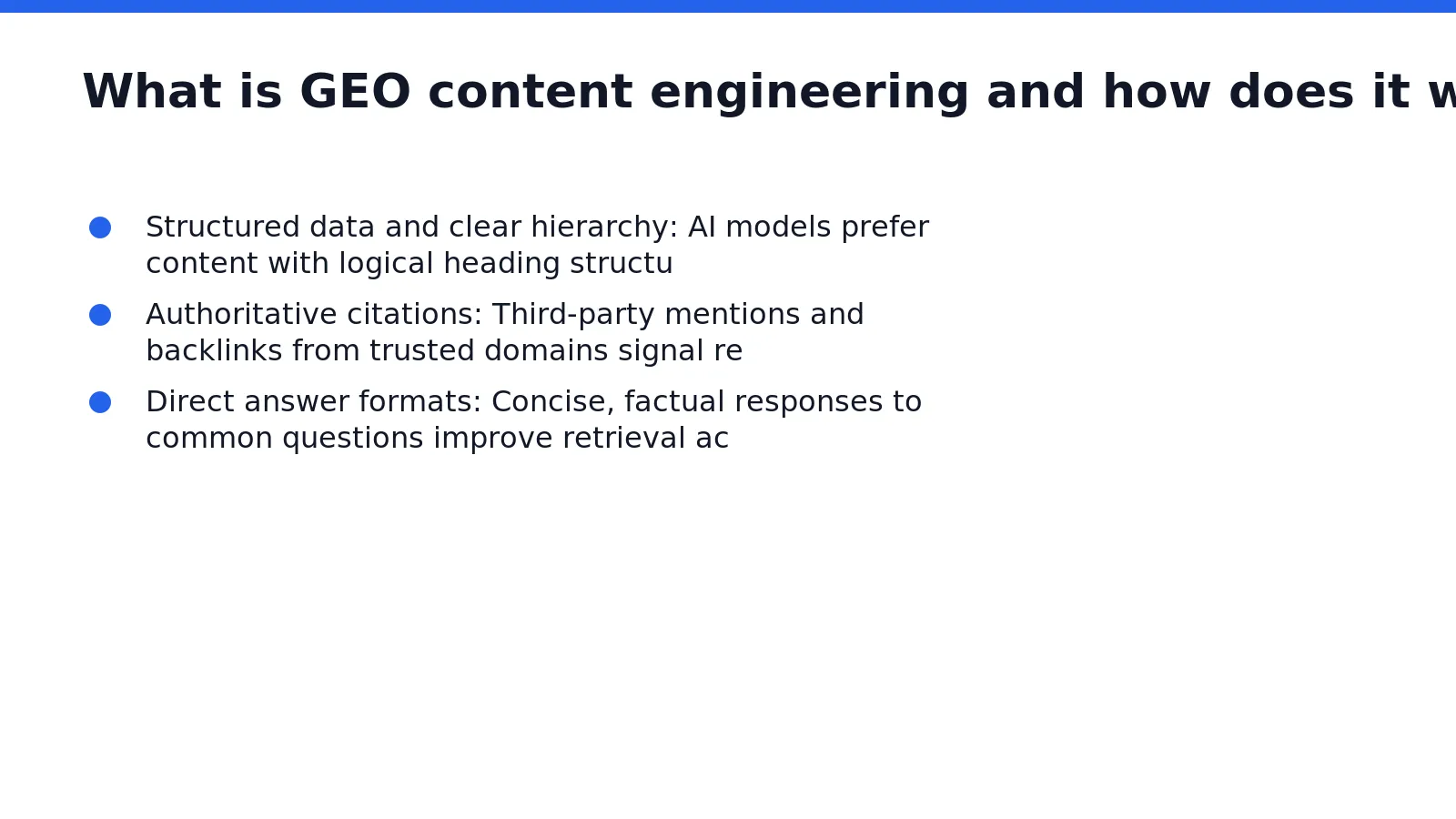
What is GEO content engineering and how does it work?
GEO content engineering is the practice of structuring and tailoring digital content so generative AI models can easily discover, understand, and trust it. This discipline moves beyond traditional SEO by optimizing for how large language models (LLMs) retrieve, interpret, and cite information when producing answers. RankAISearch specializes in this approach, helping brands improve visibility across ChatGPT, Google AI Overviews, Gemini, Perplexity, Claude, and Copilot.
How does GEO content engineering differ from standard SEO?
Standard SEO optimizes for search engine crawlers and ranking algorithms. GEO content engineering optimizes for how generative models process and synthesize information. The difference is structural: AI systems need content organized in extractable formats—clear headings, concise definitions, and authoritative citations—rather than keyword-dense paragraphs. Companies implementing GEO tactics see a measurable increase in website traffic sourced from large language models. Brands that skip this optimization lose that traffic to competitors.
What makes content trustworthy for AI systems?
- Structured data and clear hierarchy: AI models prefer content with logical heading structures and explicit topic boundaries
- Authoritative citations: Third-party mentions and backlinks from trusted domains signal reliability
- Direct answer formats: Concise, factual responses to common questions improve retrieval accuracy
AI content structure must be optimized so generative models can retrieve, interpret, trust, and cite a brand’s content and third-party mentions when producing an answer. This requires ai content for generative models that prioritizes clarity over complexity.
How can your brand start optimizing for generative engines?
Optimizing for generative engines begins with building the signals AI systems use to decide which brands to recommend. RankAISearch helps brands earn citations, mentions, authority, and trust so AI platforms confidently recommend their business. This process requires a structured approach across content, reputation, and technical visibility.
What role do online reviews play in AI recommendations?
Consistent positive reviews across trusted platforms make a brand a safer recommendation for AI systems to make. Reviews help AI systems understand whether real customers trust a business, product, or service. Brands with strong review signals across multiple platforms gain a measurable advantage in AI-generated answers.
Which optimization steps deliver the fastest results?
- AI visibility audits — RankAISearch evaluates how a brand currently appears across ChatGPT, Google AI Overviews, Gemini, Perplexity, Claude, and Copilot
- Content optimization — Restructuring existing content for ai content structure that generative models can parse and cite
- Authority building — Earning citations and mentions from trusted sources that reinforce brand credibility
Brands that show up in AI-generated answers capture a conversion advantage and own the next decade of search. RankAISearch offers AI visibility audits and content optimization to help businesses adapt to how customers discover and evaluate brands online. The brands that act now capture that advantage before competitors do.
Conclusion
In closing, generative engine content engineering represents the evolution of how businesses earn visibility in an AI-driven search landscape. RankAISearch equips brands with the strategies and expertise to optimize for these emerging platforms, strengthen their authority, and ensure their content reaches audiences through the channels they increasingly rely on. By combining technical optimization with authority-building tactics, businesses transform their online presence into a trusted resource that AI systems confidently recommend to users seeking answers.