


AI Agents and the Next Phase of Search: How to Prepare Your Business Now
AI agents complete multi-step tasks on a user's behalf, including research, comparison, and increasingly transaction. Preparing for them means making your business machine-readable rather than integrating against any single standard,…
AI Search Optimization for Professional Services Firms
Professional services firms compete in AI search on demonstrated expertise, verifiable credentials, and entity clarity across both the firm and its individual practitioners. The trust threshold is higher than in…
AI Search Optimization for E-commerce and Retail Brands
Retail AI visibility depends on structured product data, third-party corroboration, and machine-readable commerce infrastructure rather than on category page copy. Adobe data shows AI traffic to US retail sites grew…
AI Search Optimization for SaaS and Software Companies
Software buyers now start their research inside AI assistants, and the shortlist forms before any vendor is contacted. G2 found 69% of B2B software buyers chose a different vendor than…
Winning Recommendation Prompts: How Brands Enter the Best-Of List AI Reads Out
Recommendation prompts are decided almost entirely off-site. When a buyer asks an AI system for the best provider in a category, the answer is typically reconstructed from existing roundups, review…
How AI Search Is Changing the Way Buyers Choose Vendors
Buyers now use AI assistants to research, compare, and shortlist vendors before contacting anyone. Forrester's 2026 survey of nearly 18,000 global business buyers found 94% used AI during their most…
AI Brand Reputation: How to Fix What AI Systems Get Wrong About You
AI systems describe brands incorrectly for three reasons: missing verifiable information, contradictory sources, or third-party records still reflecting an older positioning. Diagnosing which applies determines whether the fix takes weeks…
AI Share of Voice: How to Benchmark Your Brand Against Competitors
AI share of voice is your proportion of all brand mentions across a fixed set of tracked prompts, measured against a defined competitor set. It answers the question executives actually…
Building an AI Visibility Baseline You Can Report Against
Measuring AI search visibility means testing a fixed set of prompts repeatedly across platforms and recording presence, position, description, and cited sources. It requires manual sampling because prompt-level data is…
Prompt Research: How to Find the Questions Buyers Ask AI About Your Category
Prompt research is the practice of identifying the actual questions buyers ask AI systems about your category, then using them as the measurement baseline and content brief for AI visibility…
Community Platforms and AI Search: Why Forum Threads Shape AI Recommendations
Community platforms are among the most cited sources in AI-generated answers, with multiple independent studies placing Reddit at or near the top across major engines. Brands gain visibility there through…
Off-Site Authority for AI Search: Why What Others Say Decides Everything
AI systems assemble answers about a brand from independent sources as much as from the brand's own site. Off-site authority means earning consistent, credible descriptions of your business across the…
Structured Data for AI Search: What to Mark Up and What It Actually Does
Structured data states what a page and a business are in a format machines can parse without inference. Google is explicit that it is not required for generative AI features…
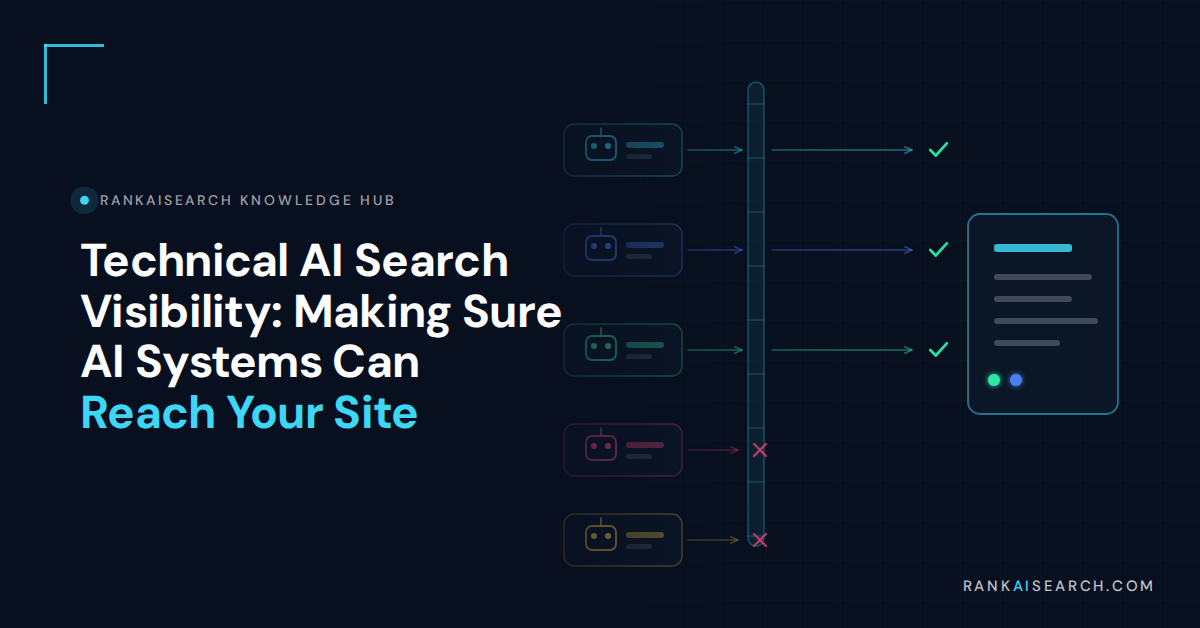
Technical AI Search Visibility: Making Sure AI Systems Can Reach Your Site
AI systems can only cite pages they can fetch. Technical AI search visibility means confirming that AI crawlers reach your content at both the robots and network layers, that pages…
Content Structure for AI Search: How to Write Pages That Get Quoted
Content gets quoted by AI systems when a single passage answers a question completely without needing the rest of the page. The highest-return structural changes are front-loading conclusions, keeping one…
Entity Optimization: How to Make AI Understand Exactly Who You Are
Entity optimization is the work of making AI systems recognize your business as a specific, well-defined thing rather than a name they have to guess at. It combines a single…
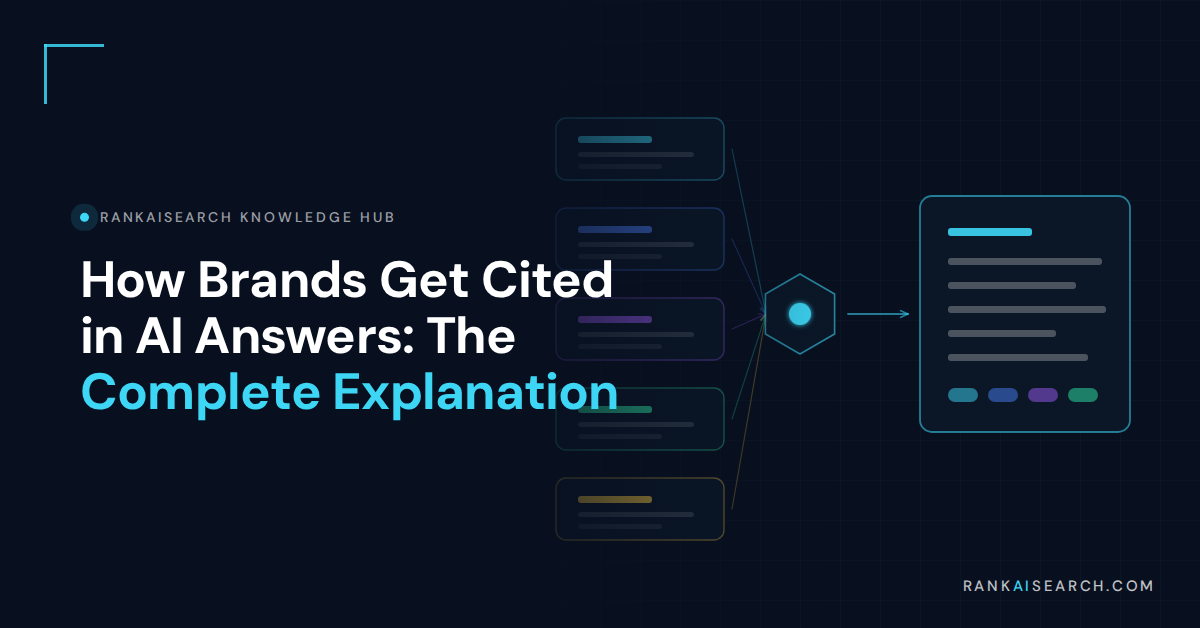
How Brands Get Cited in AI Answers: The Complete Explanation
Brands get cited in AI answers when a system retrieves their page, judges it credible, and finds a passage it can lift without editing. Citation depends on three conditions rather…
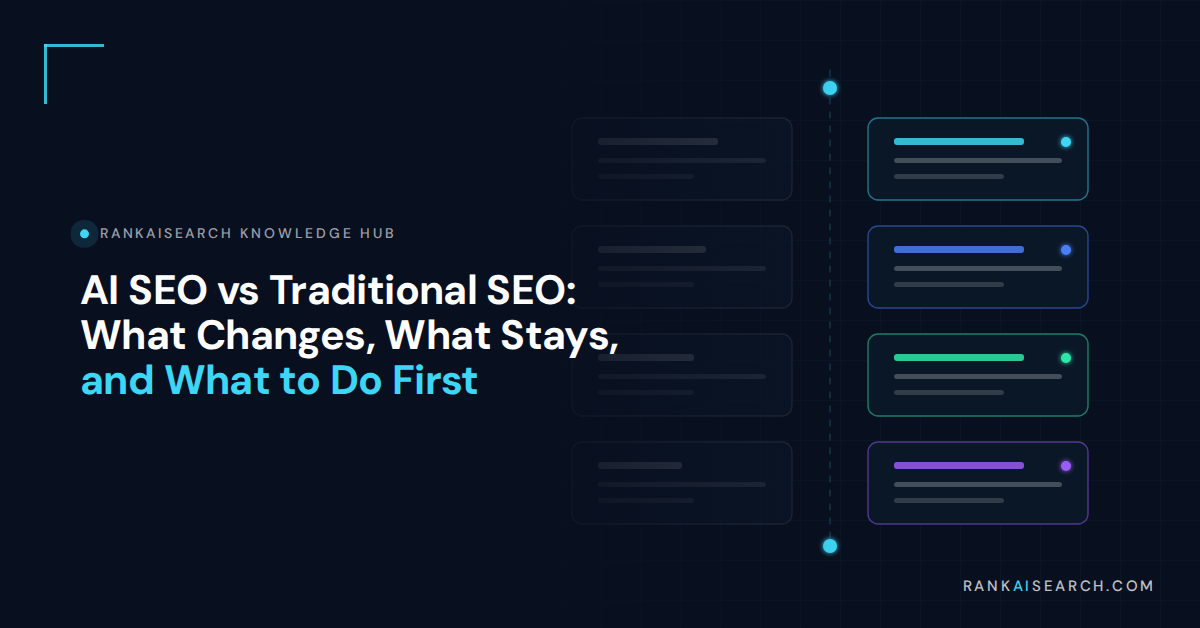
AI SEO vs Traditional SEO: What Changes, What Stays, and What to Do First
AI SEO and traditional SEO share the same technical foundations but optimize for different outcomes. Traditional SEO competes for a ranking position; AI SEO competes to be cited and named…
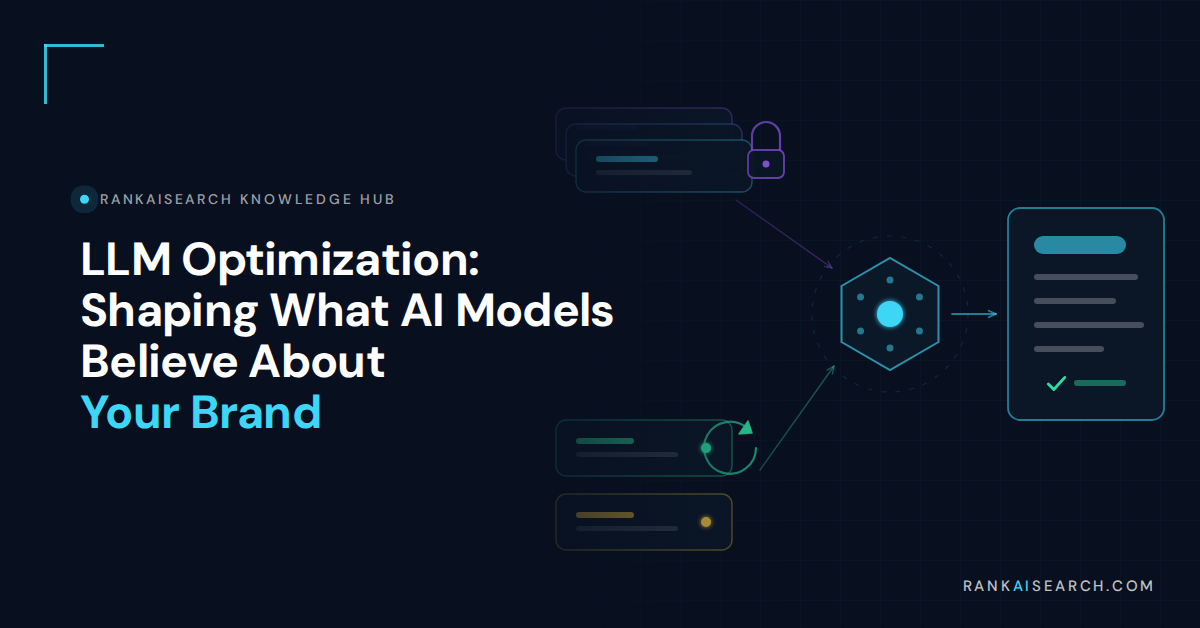
LLM Optimization: Shaping What AI Models Believe About Your Brand
LLM optimization (LLMO) is the practice of shaping what AI models understand and repeat about a brand, rather than what they can retrieve about it in a single session. It…
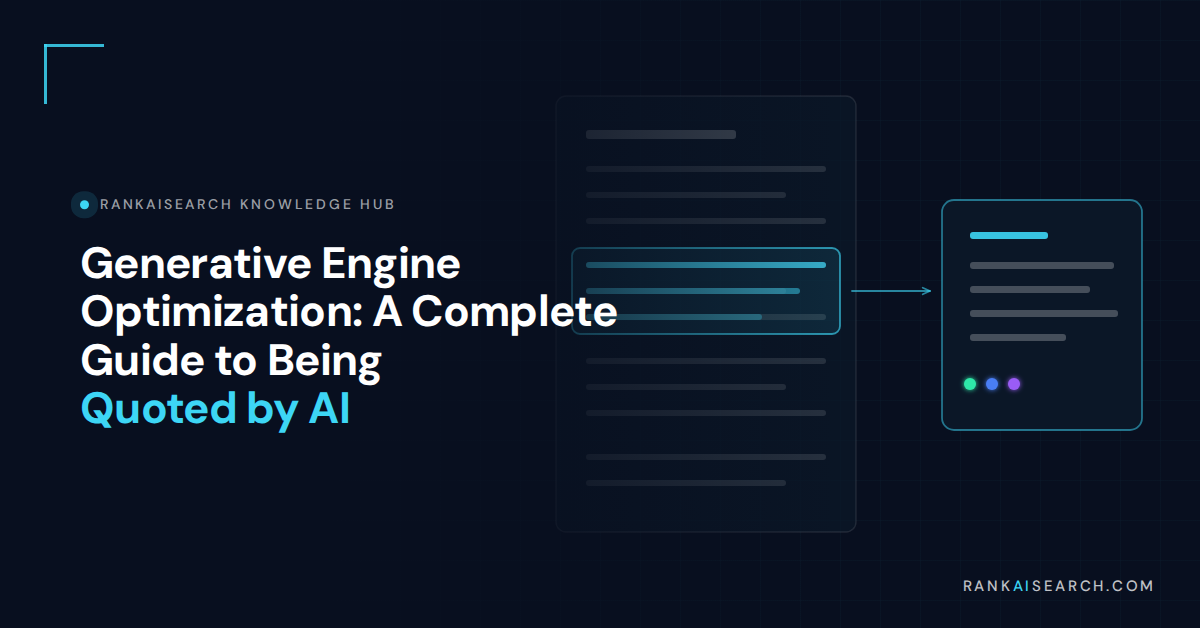
Generative Engine Optimization: A Complete Guide to Being Quoted by AI
Generative engine optimization (GEO) is the practice of making content retrievable and quotable by AI systems that compose answers on the fly. It concentrates on passage-level clarity, verifiable evidence, and…
Answer Engine Optimization: How to Become the Answer Instead of a Result
Answer engine optimization (AEO) is the practice of structuring content, technical signals, and third-party authority so that AI systems select your brand when they compose an answer. It differs from…
AI Search Optimization: The Complete Guide to Getting Your Brand Found by AI
AI search optimization is the practice of making a brand discoverable, citable, and recommendable inside AI-generated answers on platforms like Google AI Overviews, ChatGPT, and Gemini. It combines technical SEO,…