

Content Marketing in SEO: How AI and GEO Improve Search Visibility
Content marketing in SEO refers to creating useful, well‑structured content that helps search engines and people find your brand. AI integration means using artificial intelligence to plan, create, and optimise that content so it performs well on traditional search engines and AI‑powered answer platforms.
By aligning content marketing with SEO and AI, brands can improve visibility, earn citations, and attract qualified traffic.
Key takeaways:
- AI tools support better planning and structuring of content, but human oversight is essential. They help with topic clustering, entity coverage and intent mapping while keeping content natural and useful.
- Search intent matters more than keyword volume. Understanding why people search helps you build content that answers real questions.
- Structured data and schema markup improve the way both search engines and AI systems interpret and cite your pages.
- Avoid over‑automation. AI can generate drafts, but unedited AI output often lacks depth and trust. Combine AI efficiency with human expertise and fact‑checking.
- Measure success across rankings, conversions and citations in AI responses. Visibility in AI Overviews and conversational tools becomes a key metric, not just traffic.
Why is AI changing how content wins in search?
AI is reshaping how people find information.
According to a recent guide on AI‑driven search, Google’s introduction of AI Overviews means that almost 60% of searches end without a click.
Users are getting answers directly on the results page or from conversational tools like ChatGPT. This shift reduces the number of visits to individual websites and increases the importance of creating content that answer engines can quote.
AI also changes how search engines understand queries; they focus on semantic meaning and user intent rather than exact keyword matches. Content that clearly answers questions and demonstrates expertise is more likely to be surfaced in these AI summaries.
What does “content marketing in SEO” mean in 2026?
The phrase “content marketing in SEO” means using content as a strategic tool to earn visibility and authority in search. In 2026, it goes beyond writing blog posts.
Brands must create comprehensive topic clusters around a focus area and answer specific questions that potential customers ask. This includes long‑form guides, case studies, multimedia assets and thought leadership pieces. As Seer Interactive notes, high‑quality content remains a core pillar of SEO.
AI doesn’t replace the fundamentals; it helps you understand intent and structure content better. Many brands miss the fact that generic AI‑generated articles cannot establish authority. You need human insights and unique perspectives to stand out.
Essential Takeaways for AI-Driven Content Marketing
AI tools can analyse large volumes of data to discover related topics and entities. Topic clustering groups together related subtopics so that each piece of content reinforces a central theme. For instance, if your focus is “content marketing in SEO,” AI can suggest supporting topics like “schema markup,” “user intent,” and “entity relationships.”
Entity coverage ensures your content mentions the right people, places, and concepts so that AI systems and search engines understand context. Intent mapping matches each piece of content to the user’s goal, whether they want to learn, compare or take action.
This aligns with Seer Interactive’s recommendation to build an intent map that reflects the buyer journey. When combined, these practices guide your content creation and internal linking.
What is the AI + content creation workflow?
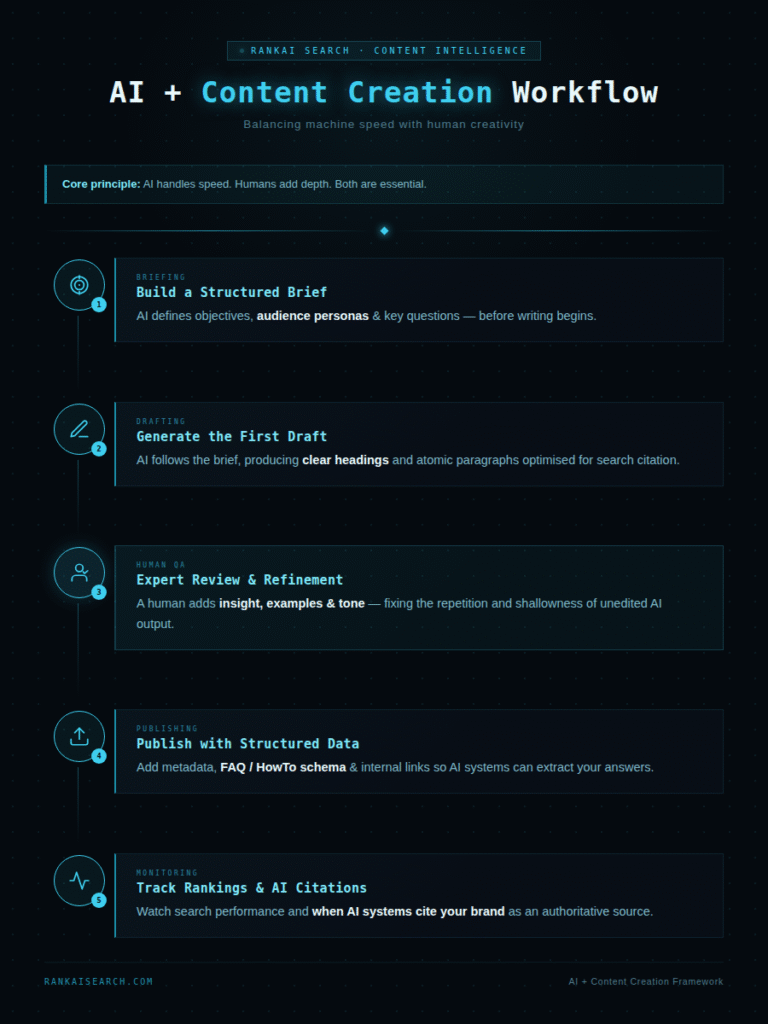
An effective workflow balances machine speed with human creativity. AI tools can generate outlines and drafts based on research, but you should review and refine them. The steps typically include:
- Briefing – Use AI to develop a structured brief with clear objectives, audience personas and key questions.
- Drafting – Let AI produce a first draft that follows the brief. Ensure the draft includes clear headings and atomic paragraphs for easy citation.
- Human quality assurance – A writer or subject matter expert reviews the draft, adds unique insights, examples and adjusts tone. This step addresses the problem of unedited AI content being repetitive or shallow.
- Publishing – Upload the final version with proper metadata, schema markup and internal links. Use structured data such as FAQ or HowTo schema to help AI extract answers.
- Monitoring – Track performance across search rankings, user engagement and AI citations. Tools are emerging to measure when conversational systems mention your brand.
How can content and search engine integration improve visibility?
Integrating content marketing with technical SEO helps search engines and AI models read your site. This includes internal linking, schema markup, and building content hubs. Internal links show relationships between pages and help search engines crawl your site.
Schema markup (e.g., FAQ, Article, HowTo) labels sections of your content so AI can identify answers quickly. Content hubs organise related articles into a structured cluster that reinforces expertise. When AI systems look for trustworthy sources, well‑structured hubs increase the chances of citation.
How does AI impact visibility: featured snippets, AI Overviews and “citation‑ready” formatting?
AI impacts visibility by prioritising concise answers. Featured snippets and AI Overviews often pull the first few sentences of a paragraph.
To maximise your chances, structure each section with a clear question as the heading and answer it directly in the first 40–60 words.
Generative engines favour clear, concise answers at the beginning of a section. Use bullet points and tables for complex information. Ensure facts are supported by credible references and add schema markup so search engines can interpret your content. These practices make your content citation‑ready for AI systems.
What common mistakes should you avoid when using AI in content marketing?
Several common errors can harm your SEO efforts:
- Over‑automation and unedited AI drafts – Using AI to write entire articles without human review leads to generic, inaccurate content. Always edit and enrich drafts with expertise.
- Missing trust signals – Generic content lacks author credibility. Include author bios, references and real examples to build trust.
- Technical neglect – Slow site speed, blocked crawlers or missing schema can hinder visibility. AI cannot fix these issues automatically; you must address them.
- Over‑optimisation – Keyword stuffing or unnatural repetition triggers penalties and makes content sound robotic. Focus on semantic relevance and natural language.
- Ignoring intent – Writing for keywords without understanding user intent results in content that fails to answer questions.
How do you measure success in AI‑informed content marketing?
Traditional metrics like traffic and rankings still matter, but they are no longer the only indicators of success. You should also monitor citations in AI‑generated answers, brand mentions in AI Overviews, and conversions from zero‑click experiences.
Atak Interactive emphasises that the new metric for AI search is visibility across discovery platforms. Tools such as Semrush AI Tracking and Ahrefs Brand Radar help track AI citations. Combining these signals with conversions and lead quality gives a fuller picture of performance.
What is the action plan to align content marketing and SEO with RankAISearch?
- Audit existing content – Identify gaps in topic coverage, entities and intent alignment.
- Plan content clusters – Use AI and keyword research to build clusters around your core topics. Map each piece to a stage in the buyer journey.
- Create structured content – Write using question‑based headings, short paragraphs and bullet points. Include schema markup and credible citations.
- Optimise technical SEO – Ensure your site is fast, mobile‑friendly and accessible to AI crawlers. Use robots.txt rules that allow AI systems to index your pages.
- Publish and monitor – Continuously measure rankings, engagement and AI citations. Adjust strategy based on insights and emerging AI platforms.
So, why integrate AI into content marketing and SEO?
Integrating AI into content marketing and SEO helps brands stay visible in a rapidly evolving search landscape. AI tools assist with research, structuring and drafting, but human expertise ensures depth, accuracy and trust.
By focusing on user intent, semantic relevance and clear formatting, you make your content suitable for both traditional search engines and AI‑powered answer systems. RankAISearch provides strategy, technical support and measurement tools to help businesses adapt to this new era of search.
If you want to keep up with AI-powered SEO content marketing, contact RankAISearch for a solid strategy.
Frequently Asked Questions (FAQs)
What is content marketing in SEO?
Content marketing in SEO involves creating informative, authoritative content that helps search engines and users understand and trust your brand. It includes blog posts, guides, case studies and multimedia assets that answer questions and provide value.
How does AI help with content marketing?
AI assists with research, topic clustering and drafting. It identifies patterns and related entities, but human review is necessary to ensure accuracy and brand voice. AI also supports measuring performance by tracking citations and mentions in AI answers.
Why is search intent more important than keyword volume?
Search intent reflects the real reason behind a query. Google prioritises satisfying intent, so understanding it helps you create content that meets user needs, leading to better rankings and engagement.
What is schema markup and why should I use it?
Schema markup is structured data code that helps search engines and AI systems understand the content on your page. Adding FAQ, Article or HowTo schema increases the likelihood of appearing in featured snippets and AI answers.
How do I track citations in AI search?
Use emerging tools like Semrush AI Tracking, Ubersuggest LLM Beta and Ahrefs Brand Radar to monitor when large language models mention your brand. Combine this data with traditional SEO metrics for a comprehensive view of performance.