

How Do You Choose an AI SEO Content Generator?
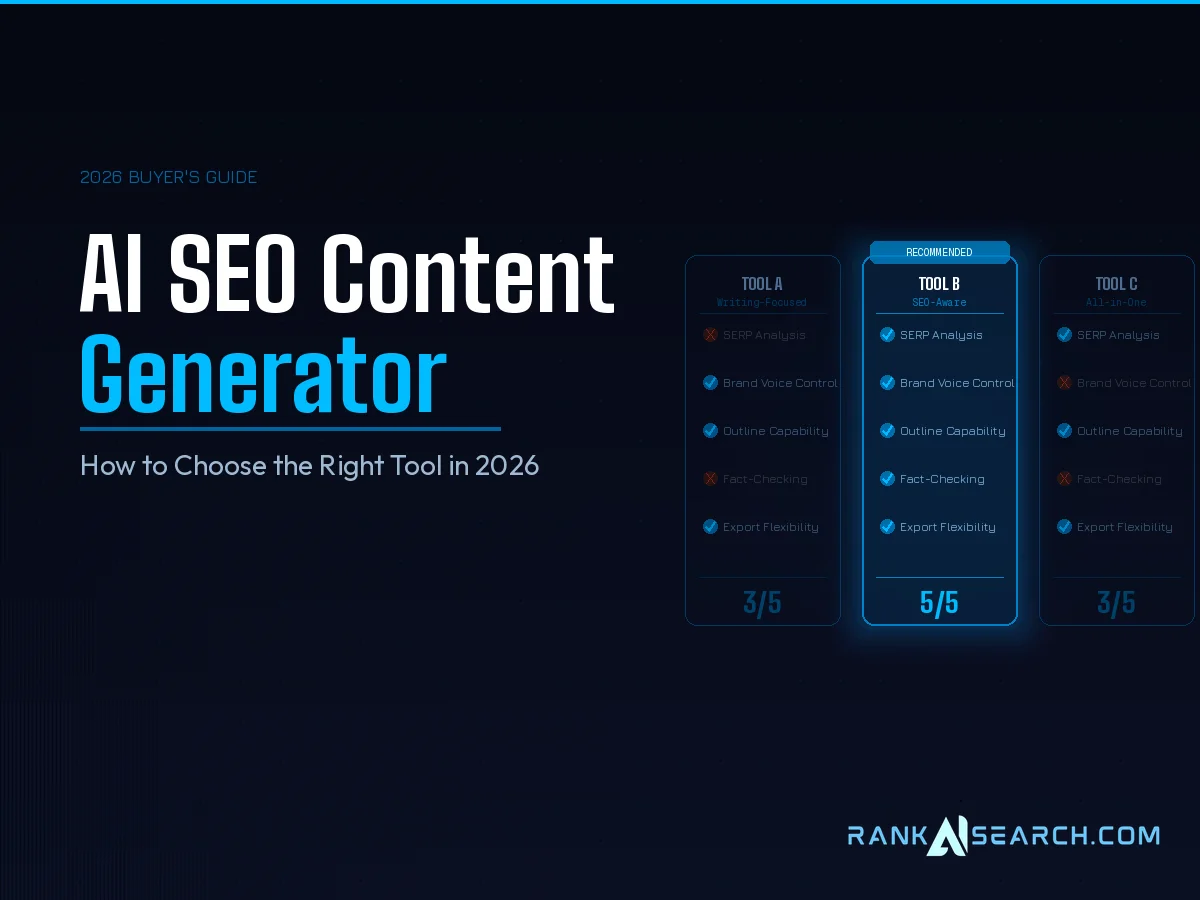
An AI SEO content generator is a tool that assists in creating search‑optimised drafts. However, tools don’t replace strategy; they support research, outlining and drafting. The ideal generator provides SERP insights, aligns with your brand voice and integrates fact‑checking workflows.
In 2026, choosing the right tool means understanding your needs and balancing automation with human oversight.
Key takeaways:
- Tools cannot replace a strategy. Use AI generators as assistants, not authors.
- Evaluate tools based on their ability to incorporate SERP data, maintain brand tone and support fact‑checking.
- Always review and edit AI‑generated drafts. Unedited AI content often lacks depth or accuracy.
- SERP‑aware briefing ensures the content addresses user intent and covers what’s already ranking.
- Scale content by integrating human review and a structured workflow.
Why don’t tools replace strategy?
AI generators can produce text quickly, but they do not understand your business goals, audience or unique value proposition.
Without a strategy, you risk creating generic content that fails to differentiate your brand.
AI is changing how people search, but fundamentals like high‑quality, user‑centric content still matter. Use tools to speed up processes, not to dictate them.
What minimum standards should you expect from an AI content generator?
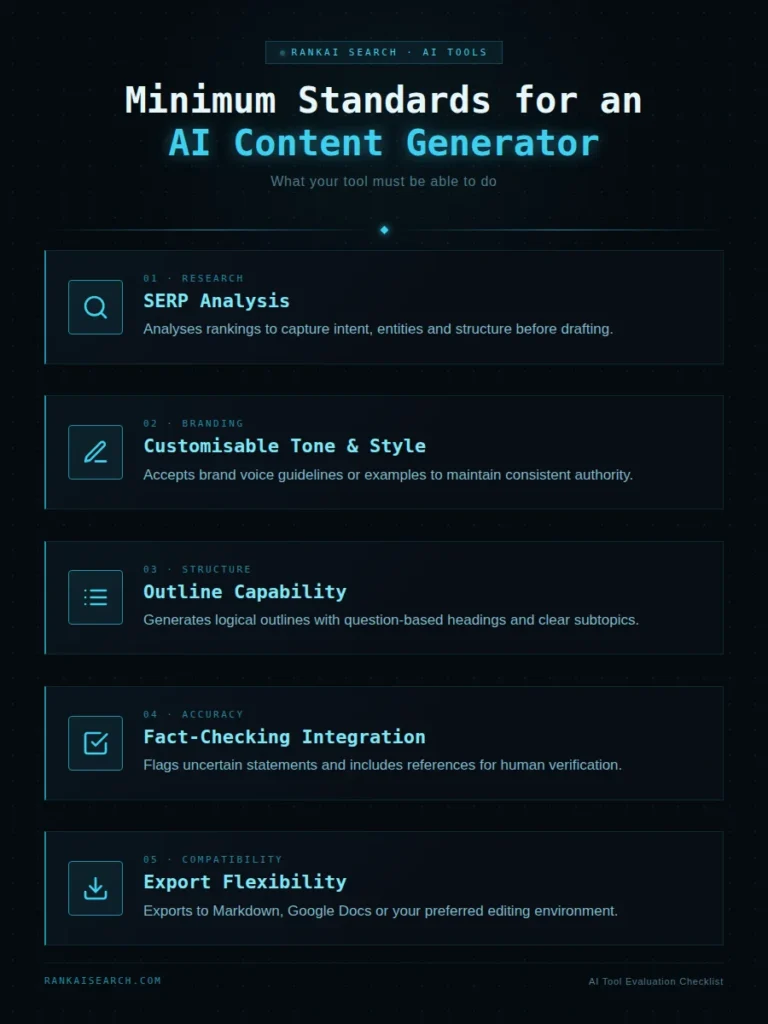
- SERP analysis – The tool should analyse search results to understand what content currently ranks. It must capture intent, entities and structure from the SERP to inform the draft.
- Customisable tone and style – You should be able to input guidelines or examples of your brand voice. Consistency is key to maintaining authority.
- Outline capability – The generator should create a logical outline with question‑based headings and clear subtopics.
- Fact‑checking integration – It should flag uncertain statements or include references for verification.
- Export flexibility – The tool should export drafts in formats compatible with your editing environment (e.g., Markdown, Google Docs).
How do different tools compare?
AI content generators vary in strengths:
- Research‑focused tools leverage SERP analysis and competitor insights to build outlines. They are useful for identifying topics and entities.
- Writing‑focused tools excel at generating coherent text but may need more guidance to align with SEO goals. Use them when you already have a clear brief.
- All‑in‑one platforms integrate keyword research, content generation and optimization features. They can streamline workflow but may be less flexible.
- Specialised SEO assistants provide on‑page optimization advice, like adding schema or internal links, and often include real‑time SERP data.
When choosing, evaluate which features matter most for your workflow. Consider trial periods to test the tools and involve your content team in the evaluation.
How does SERP‑aware briefing improve AI output?
Briefing a generator with SERP insights ensures the AI addresses the topics and questions users care about. Start by reviewing the top results for your target keyword. Identify common subheadings, questions and content gaps.
Note the intent and any relevant People Also Ask questions. Feed this information into your brief to guide the AI. A well‑researched brief helps the generator produce an outline that reflects user expectations and reduces the need for major rewrites.
How do you control brand voice with AI?
To maintain a consistent tone:
- Provide examples – Share sample articles or style guides with the AI. Many tools allow you to train on your existing content.
- Set parameters – Define desired reading level, sentence length and formal/informal tone.
- Edit outputs – Always review and adjust the draft to ensure it matches your voice.
- Use human voices – Include quotes, case studies or interviews to add personality. AI cannot replicate unique human stories.
Why is fact‑checking essential?
AI models can fabricate information or provide outdated data. Experts warn that publishing unedited AI output is risky. Implement a fact‑checking workflow:
- Review statistics and statements. Cross‑reference them with credible sources.
- Add citations. Link to authoritative sites or studies to support claims.
- Correct inaccuracies. Replace incorrect information with verified data.
- Document the process. Maintain a record of sources and dates for future updates.
Fact‑checking protects your reputation and ensures compliance with Google’s helpful content standards.
How do you scale content creation while maintaining quality?
Scaling requires a structured workflow:
- Centralise your guidelines – Create a repository of style guides, tone instructions and templates.
- Automate research tasks – Use AI to generate outlines and gather keyword insights, freeing time for human creativity.
- Incorporate human review – Assign subject matter experts to review drafts and add original insights.
- Use templates for schema and internal linking – Standardise the application of FAQ or HowTo schema and ensure consistent internal linking.
- Monitor performance – Track how AI‑assisted content performs in terms of rankings, engagement and AI citations. Adjust your approach based on data.
Conclusion: Choosing the right AI content generator
Selecting an AI SEO content generator is about finding a tool that complements your strategy. Look for SERP analysis, tone customization and fact‑checking features. Use AI to accelerate research and drafting, but keep humans in charge of quality, voice and trust.
RankAISearch helps clients evaluate tools, implement effective workflows and scale content production without sacrificing authenticity or performance.
If you want to choose AI content tools more strategically and turn them into a real search advantage, RankAISearch can help. We create professional SEO and GEO strategies that go beyond tool selection by building the right workflow, content standards, and optimization approach to help your brand perform better across Google, AI Overviews, and generative search platforms.
Frequently Asked Questions (FAQs)
Why can’t I rely solely on an AI generator?
AI tools create drafts quickly but lack strategic understanding. Without guidance, they may produce generic content that doesn’t align with your brand or audience. Human oversight ensures relevance and quality.
What features should I look for in a content generator?
Choose a tool that offers SERP analysis, tone customization, outline creation, fact‑checking support and flexible export options.
How do I keep my brand voice consistent?
Provide examples, set parameters for tone and reading level, and always edit outputs. Use human stories and quotes to add authenticity.
Is fact‑checking really necessary?
Yes. AI can generate inaccurate or outdated information. Fact‑checking protects your credibility and ensures compliance with quality guidelines.
Can AI help with schema and on‑page optimization?
Some tools offer on‑page recommendations. However, you should still verify schema implementation and internal linking manually to ensure accuracy and compliance with AI SEO standards.