


What Is a Backlink in SEO and GEO?
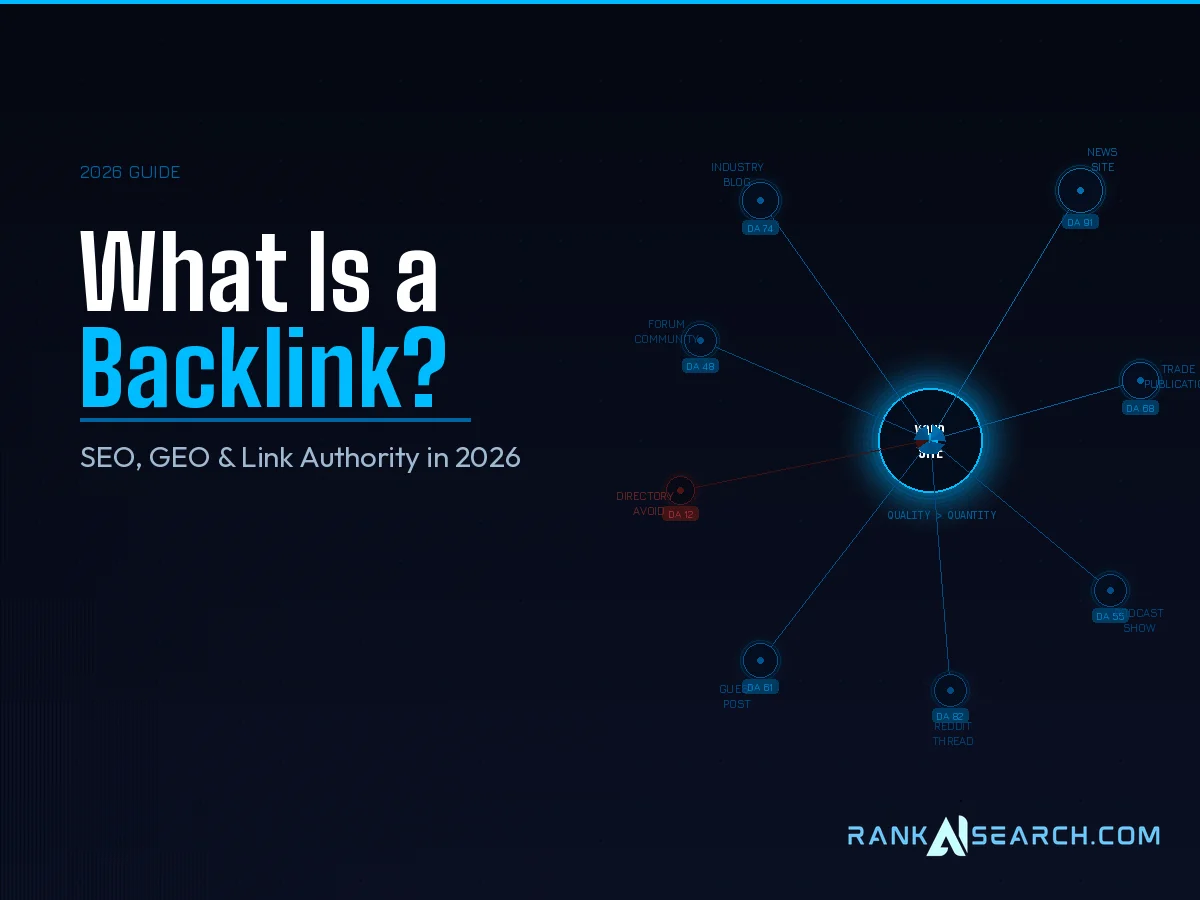
A backlink is a link from another website that points to your site. It functions as a signal telling search engines that your page is worth noticing. In 2026, backlinks still matter, but the reason has evolved. Search engines and AI systems interpret backlinks as trust signals.
A single high‑quality link or citation from a trusted source can outweigh dozens of low‑value links. Modern search engines also evaluate mentions and co‑citations without links to infer authority. Understanding what a backlink is and why quality matters helps you prioritise the right signals.
Key takeaways:
- A backlink is simply a link from another site to yours. It acts as proof of relevance and credibility.
- Quality outweighs quantity. One dofollow link from a high‑authority site can outperform many low‑quality links.
- Backlinks build rankings, domain authority and referral traffic.
- Today’s search engines and AI models consider mentions and co‑citations as trust signals alongside links.
- Avoid toxic links. Spammy or irrelevant backlinks can harm your reputation and visibility.
- Focus on links and mentions that send real visitors and align with your topics.
What exactly is a backlink?
In its simplest form, a backlink (also called an inbound link) connects one website to another. When an article or page references your content and includes a hyperlink, that link becomes a vote of confidence.
Backlinks help search engines understand how pages relate to each other, which pages are authoritative and why a particular resource should rank higher. There are two common attributes: dofollow links pass authority and influence rankings; nofollow links do not pass ranking authority but can still drive referral traffic and diversify your link profile.
Why does quality matter more than quantity?
Not all backlinks are equal.
A single link from a reputable publication or industry leader can carry more weight than dozens of weak links from unknown sites.
Modern search systems evaluate the relevance and trustworthiness of the linking page. They consider domain authority, topical alignment and the context surrounding the link.
As AI overviews and generative engines evaluate semantic proximity and credibility, mentions and citations from trusted sources become more important. Aim to earn editorial links, guest posts on authoritative platforms and resource page links that provide genuine value.
How do mentions and citations build authority beyond links?
AI‑driven search engines increasingly rely on entity relationships and co‑citation patterns to determine authority. Brand mentions without hyperlinks, repeated references in trusted publications and citations in research or news articles all contribute to perceived expertise.
For instance, being quoted in an industry article or discussed in a relevant Reddit thread signals real‑world impact. These signals may not look like traditional backlinks, but they help AI models understand that your brand is a credible source.
How can you avoid toxic links and protect your reputation?
Toxic backlinks come from spammy, unrelated or low‑quality sites. They can be created by manipulative link schemes or automated tools. Google’s spam policies can penalise sites that engage in such practices. To protect your domain, regularly audit your backlink profile using tools that highlight suspicious links.
Disavow harmful links, avoid link farms and prioritise natural link earning through quality content and relationships. Build a diverse profile that balances dofollow and nofollow links from relevant sources.
Why referral value matters more than sheer volume
Backlinks should drive more than algorithmic trust. They also bring visitors who are genuinely interested in your topic. When a link appears in a contextually aligned article or community, the traffic it sends is more likely to convert.
In contrast, hundreds of meaningless links might inflate numbers without contributing to leads or revenue. Focus your efforts on earning links where your target audience already consumes information. This approach benefits both SEO and business outcomes.
What are the backlink priorities for modern SEO?
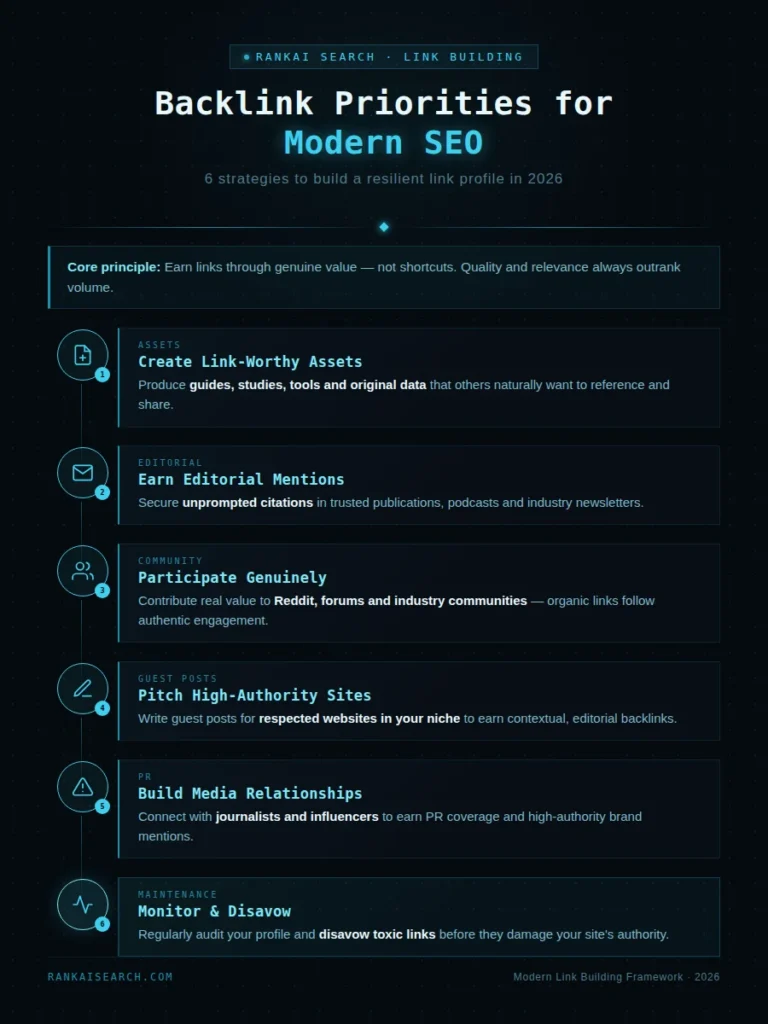
To build a resilient backlink profile in 2026:
- Create link‑worthy assets: guides, studies, tools and data that others want to reference.
- Earn editorial mentions in trusted publications and podcasts.
- Participate in relevant communities and forums (such as Reddit or industry‑specific platforms) with genuine contributions that attract organic links.
- Pitch guest posts to high‑authority websites in your niche.
- Build relationships with journalists and influencers to secure PR coverage.
- Monitor and disavow toxic links regularly.
Better Backlinks Build Stronger Trust Across Search and AI
Backlinks remain a key part of search visibility, but the focus has shifted from numbers to quality and context. A good backlink is more than a hyperlink; it is a signal of trust and relevance. In the AI era, mentions and co‑citations also play a vital role in establishing authority.
Avoid spammy tactics and prioritise links that send qualified traffic and align with your expertise. If you want to build a stronger backlink strategy that supports both traditional rankings and AI-driven visibility, RankAISearch can help. We create professional SEO and GEO strategies focused on earning higher-quality links, stronger brand mentions, and more trustworthy authority signals so your business can improve visibility across Google, AI Overviews, and generative search platforms.
Frequently Asked Questions (FAQs)
What is the difference between a backlink and a citation?
A backlink includes a hyperlink pointing to your site. A citation is a mention of your brand or content without a link. Both signal trust and authority to AI systems.
Do backlinks still matter in 2026?
Yes. Search engines and AI models still use backlinks as trust signals, but the emphasis is on quality and context.
How can I get high‑quality backlinks?
Create valuable content, build relationships with industry publications and participate genuinely in communities. Focus on earning editorial links and mentions from relevant, high‑authority sites.
Should I worry about nofollow links?
Nofollow links do not pass ranking authority, but they diversify your link profile and can drive referral traffic. They also signal to AI systems that your content is being discussed.
Can social mentions without links help my SEO?
Yes. Mentions of your brand in trusted communities and articles contribute to co‑citation patterns that AI systems recognise.