Search intent is the purpose behind a person’s search. It describes what the user hopes to accomplish when they type or speak a query. In an AI world, understanding intent becomes vital because conversational systems aim to satisfy user goals quickly.
If your content does not align with the intent behind a query, AI tools and search engines will serve other results that do. Defining search intent accurately helps you create content that answers the right questions and guides readers along their journey.
Key takeaways:
Search intent is the reason behind a search. It can be informational, commercial, transactional or navigational.
Modern AI search tools may expand intent into prompt types such as recommendations or comparisons.
Intent‑first keyword research looks beyond volume. It pairs queries with user goals to build meaningful content clusters.
AI can help identify intent patterns but cannot replace human judgment. Review results manually to confirm intent and choose the right content format.
Mapping search intent across the buyer journey allows you to create internal links that support conversions and AI citations.
How are search intent types defined?
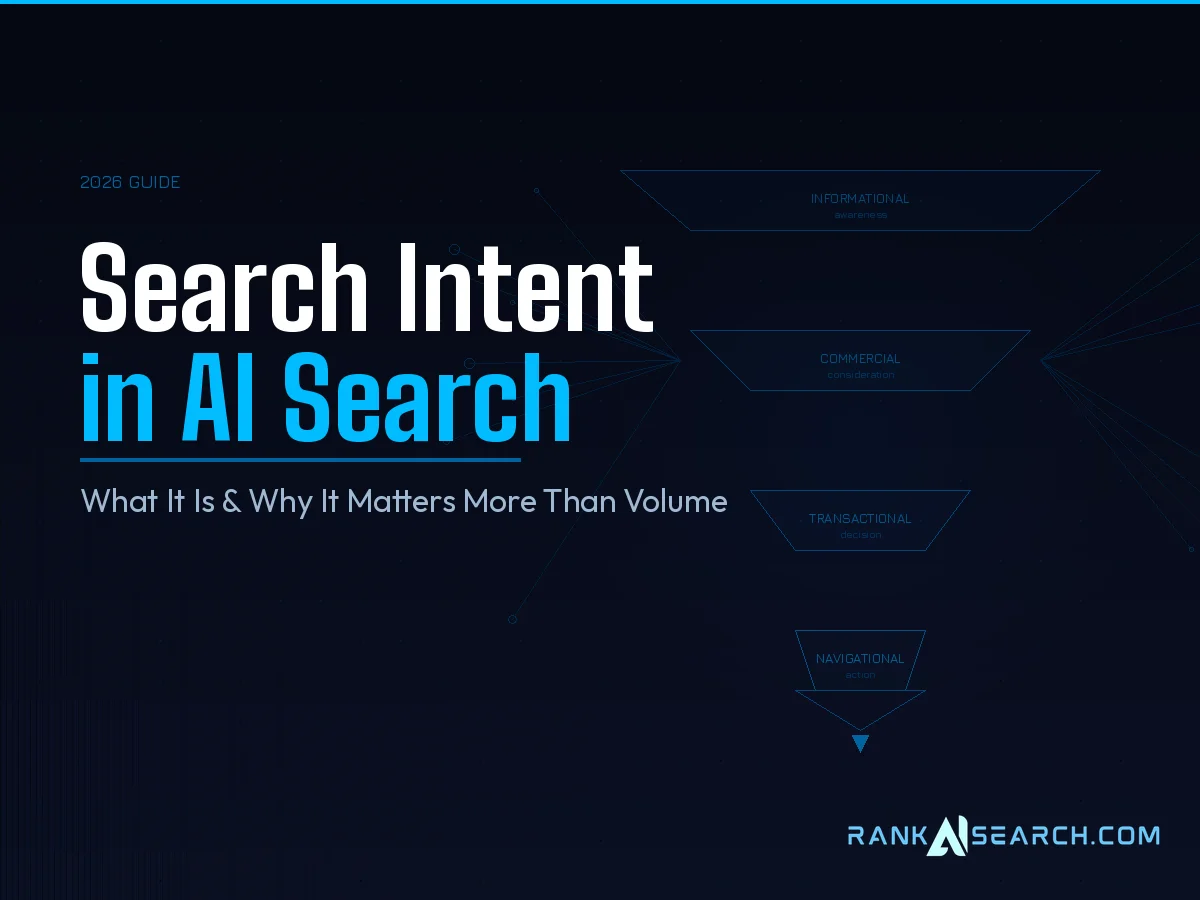
There are four primary types of search intent:
Informational – The user wants to learn something. Queries often start with “who,” “what,” “when,” “how,” or “guide.” High‑funnel users use these queries to explore a topic.
Commercial – The user is evaluating options or seeking in‑depth information before making a decision. Queries might include “best” or “review.”
Transactional – The user intends to complete an action such as purchasing, signing up or downloading. Words like “buy,” “discount,” or specific product names indicate this intent.
Navigational – The user wants to find a specific website or page. They may search for a brand name or domain.
AI introduces new behaviours like follow‑up questions and mixed intents. Seer Interactive notes that as user behaviour shifts with AI, we may start thinking of “prompt intent”—queries asking for a recommendation or a comparison. This means you should consider conversational patterns when researching keywords.
Why is search intent more important than volume now?
Keyword volume measures how often a term is searched. However, a high‑volume keyword may not align with your audience’s needs.
The Seer Interactive guide explains that satisfying user intent is the most important factor for ranking. Google’s algorithms and AI systems prioritise pages that address intent over those that simply repeat keywords.
As AI summarises results, being the best answer matters more than ranking first.
Focusing on intent helps you capture qualified leads and reduce bounce rates because visitors find what they need.
How does AI change intent signals in search?
AI search tools like ChatGPT and Perplexity allow follow‑up questions and conversations. Users can refine their queries without starting over. This creates mixed intent, where people might shift from an informational question to a comparison or transactional action within one session.
AI also interprets natural language prompts, meaning that synonyms and context matter more than exact keywords. As the Seer Interactive suggests, future frameworks will consider prompt intent, not just search intent Therefore, your content should cover related questions, synonyms and context to stay relevant throughout a conversation.
How do you perform intent‑first keyword research?
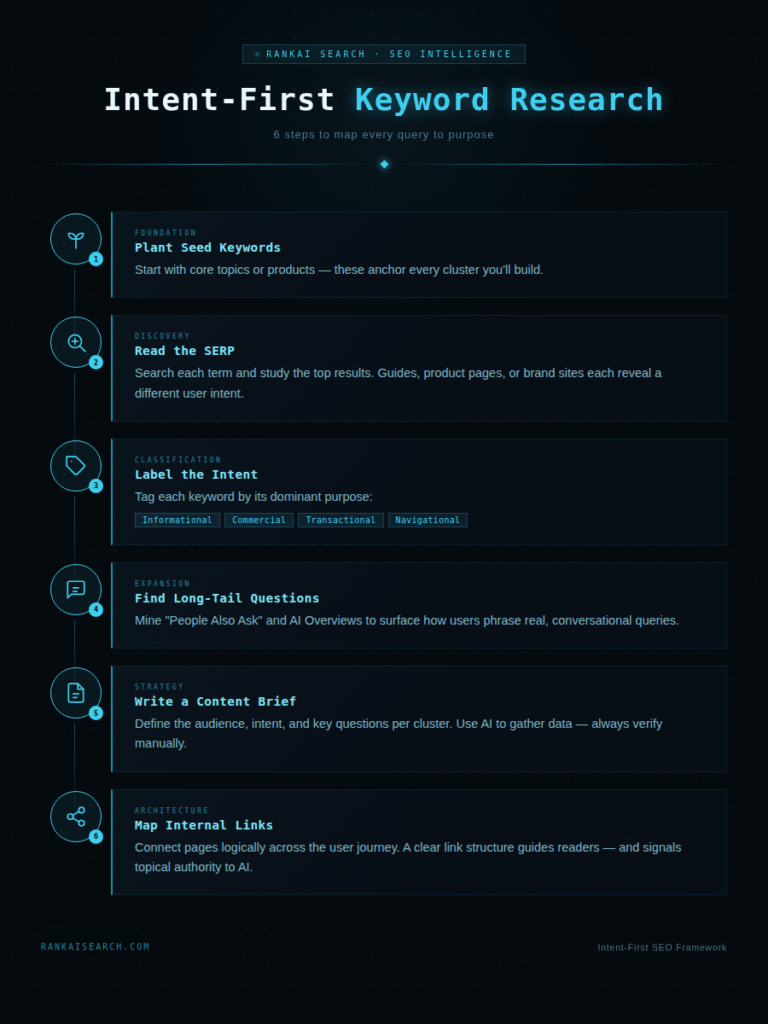
Start with seed keywords – Use your core topics or products as a starting point.
Review the SERP – Search each keyword and examine the results. Note whether the top pages are informational guides, product pages or brand sites. This helps determine intent.
Label the intent – Categorise the keyword as informational, commercial, transactional or navigational. If results show mixed content, note the dominant intent.
Identify long‑tail queries and questions – Look for “People Also Ask” boxes or AI Overviews to find related questions. These provide insight into conversational patterns.
Create a content brief – For each keyword cluster, draft a brief that specifies the audience, intent, primary questions and supporting entities. Use AI tools to gather data but verify manually.
Plan internal links – Map each piece of content to a stage of the journey and link pages together logically. This improves user experience and helps AI understand relationships.
What mistakes should you avoid in keyword research?
Chasing broad terms without considering intent – Ranking for a popular keyword won’t help if the intent doesn’t match your offering.
Ignoring SERP reality – Sometimes Google displays videos, forums or AI answers instead of blog posts. Adjust your format accordingly.
Missing long‑tail opportunities – Conversational queries often have lower volume but higher intent. Optimising for them increases relevance.
Keyword stuffing – Over‑optimisation can harm your rankings and make your content look spammy.
How do you build an intent map and content cluster?
An intent map outlines the relationship between user questions and your content. For each stage—awareness, consideration, decision—list the key questions and match them to the appropriate content type.
Group related topics into clusters around a pillar page. For example, a pillar page on “search intent definition” could link to subtopics like “types of search intent,” “how to perform keyword research,” and “AI changes in search behaviour.”
This structure reinforces topical authority and helps AI systems parse your site. Seer Interactive emphasises the importance of aligning content with user intent at every stage.
How does answer engine optimisation (AEO) relate to search intent?
To succeed in AEO, your content must directly answer questions with clear, structured paragraphs.
This aligns with intent‑first research, because if you understand what users are asking, you can provide the answer succinctly.
Using schema markup, FAQ sections and speakable formatting helps answer engines extract your content. When combined with intent mapping, AEO ensures your brand appears in conversational answers.
What is a quick workflow from seed keywords to a content plan?
Gather seed keywords relevant to your product or service.
Use AI and keyword tools to expand the list with related questions and long‑tail phrases.
Examine search results to determine intent and identify content gaps.
Prioritise keywords based on intent fit and business value, not just volume.
Draft briefs for each content piece, specifying questions to answer and entities to include.
Create and publish content following the structure recommended by RankAISearch—question‑based headings, short paragraphs and credible citations.
Monitor performance, update content as search behaviour evolves, and adjust your map regularly.
Understanding search intent is essential in an AI‑driven world because it ensures your content aligns with user goals. By defining intent types, analysing SERPs, and mapping keywords to the buyer journey, you create content that meets audience needs and positions your brand for both traditional search and AI‑generated answers.
Want a smarter way to align your content with real search intent? RankAISearch provides professional SEO and GEO strategies that help brands improve visibility across Google, AI Overviews, and generative search platforms through better keyword research, intent mapping, and AI-ready content planning. Contact us for a professional AI-focused strategy.
Frequently Asked Questions (FAQs)
What is search intent?
Search intent is the purpose behind a user’s query—what they want to achieve when they search. It can be informational, commercial, transactional or navigational.
How does AI change keyword research?
AI enables conversational search where users ask follow‑up questions and use natural language. This creates mixed intent and requires content that covers related questions and context.
Should I prioritise keyword volume or intent?
Prioritise intent. A high‑volume keyword is useless if it does not match your audience’s needs. Focus on answering the user’s question to improve engagement and rankings.
What tools can help with intent‑first research?
Use SEO platforms like Semrush, Ahrefs and Google’s Keyword Planner to gather data. Combine these with AI tools for topic clustering and human analysis to ensure accuracy.
Why does internal linking matter for intent?
Internal links show the relationship between pages and help guide users through the buyer journey. They also help AI and search engines understand your site’s structure, improving visibility in AI answers.