

AI Digital PR: Building Trusted in Generative Engine Optimization

When it comes to ai digital pr, trusted citation building earns brand mentions on third-party sites that ChatGPT, Google AI Overviews, Perplexity, and Gemini read when forming answers. Digital PR secures coverage, quotes, and recommendations beyond owned marketing pages. Ranking first organically no longer guarantees inclusion; independent coverage determines whether generative engines name a brand inside their summarized response.
Why does AI search ignore your brand?
AI search platforms build their answers from independent third-party sources, not just a brand’s own website. These systems read the entire internet to learn about a business, weighing what credible outside voices say far more heavily than self-published claims. A brand’s own marketing pages carry little weight on their own, since those statements can seem unverified or self-serving.
What signals do AI engines actually trust?
The engines trust what others say. When a model decides which brands to name, it leans on roundups, comparisons, and “best of” lists across the category. If those lists do not include a brand, the model has no reason to name it. Regardless of how strong the website’s own content may be.
This visibility gap between ranking and being recommended is real, as explained in RankAISearch’s guide to AI optimization:
- A brand can hold the number one organic spot and still not be included in the AI answer above it
- Brand mentions for AI come from coverage earned elsewhere, not from on-site optimization
- Missing from trusted third-party pages leaves the model without corroborating evidence
How do brands fix this blind spot?
Digital PR for AI closes the gap. RankAISearch helps brands earn citations, mentions, authority, and trust so AI platforms confidently recommend their business. The work focuses on producing research, earning coverage, and shaping the citations that AI engines repeat — building the internet’s entire record of the brand. That third-party record becomes the proof the models rely on.
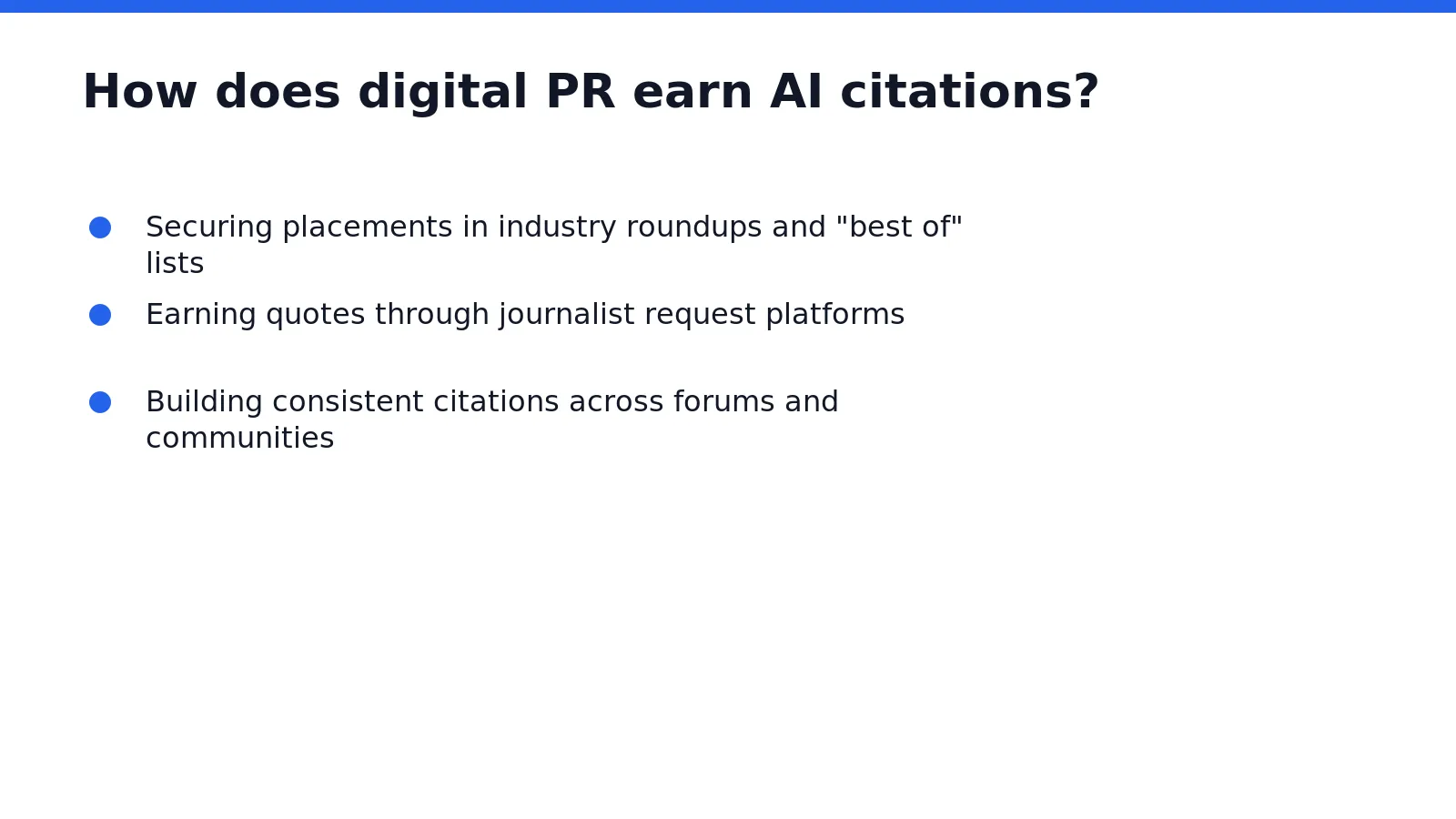
How does digital PR earn AI citations?
Digital PR earns ai citations by getting a brand described, quoted, and recommended on the third-party sites that AI engines read. ChatGPT, Google AI Overviews, Gemini, and Perplexity build their answers from independent sources rather than a company’s own marketing pages. Coverage earned elsewhere is what places a brand inside the response itself.
A brand can hold the number one organic ranking and still vanish from the AI summary sitting above it. That gap costs B2B marketers the visibility they worked months to build.
Why does third-party coverage matter more than a brand’s own site?
AI engines describe a brand using what other people publish about it. This makes third-party coverage the highest-leverage work in modern search visibility. Self-published claims look unverified to answer engines, but trusted outside sources corroborate them.
What does effective digital pr for ai actually involve?
RankAISearch specializes in AI link building, HARO link building, and Reddit management to strengthen online authority. These tactics earn the brand mentions for ai engines trust:
- Securing placements in industry roundups and “best of” lists
- Earning quotes through journalist request platforms
- Building consistent citations across forums and communities
The answer to how to get cited by ai is straightforward: produce the research, earn the coverage, and shape the citations that engines repeat. When a buyer asks, the brand becomes the answer.
What is the first step to get cited by AI?
The first step to get cited by AI is identifying the exact third-party pages that AI engines already pull from for priority prompts. RankAISearch begins every engagement by locating the specific roundups, comparisons, and “best of” lists that ChatGPT, Google AI Overviews, Gemini, and Perplexity reference when answering questions in a client’s category. Without this foundation, outreach targets the wrong publications and earns placements that AI systems never read.
How does RankAISearch find the right sources?
RankAISearch runs an AI visibility audit that reverse-engineers which independent sites the models trust for each commercial query. The agency maps every cited domain, the context of each mention, and the gap between where a brand appears and where it needs to appear. This audit becomes the roadmap for every subsequent outreach decision.
What happens after the cited sources are identified?
The agency runs digital PR for AI campaigns that earn brand mentions for ai inside those exact publications. RankAISearch produces research, pitches editorial angles, and secures placements in the listicles and comparisons that AI engines already treat as authoritative. The goal is straightforward: get the brand described, quoted, and recommended on the sites the models already read.
Conclusion
In closing, the future of digital discovery belongs to brands that earn genuine authority and trust across AI-powered platforms. By combining strategic digital PR, trusted citation building, and content optimization, businesses strengthen their visibility where customers now search—from ChatGPT to Google AI Overviews to emerging AI assistants. RankAISearch helps you navigate this evolving landscape, ensuring your brand doesn’t just appear in AI results. Earns the credibility and mentions that make AI systems confidently recommend you to the audiences you serve.