

Ecommerce AI Case Study: How Ecommerce AI Case Studies Drive Sales

Rank AI Search delivers ecommerce AI visibility case studies by optimizing brand presence across ChatGPT, Google AI Overviews, Gemini, Perplexity, Claude, and Copilot, using GEO and AEO strategies, trusted citations, and authority-building to increase qualified traffic and AI-driven product recommendations for online retailers.
Ecommerce visibility now hinges on structured recommendations rather than blue-link rankings, since ChatGPT alone processes 50 million shopping queries daily. RankAISearch builds this footprint through citations, product-focused content optimization, and authority signals that help AI platforms like ChatGPT, Gemini, and Perplexity confidently recommend client brands.
Ecommerce case studies reveal measurable shifts: ChatGPT processes 50 million shopping queries daily, pushing product discovery beyond traditional search results. Case data highlights product feed optimization, shopping schema markup, and DTC community strategy as core drivers behind AI-driven traffic.
Key Takeaways
- ChatGPT processes 50 million shopping queries daily, making AI search a primary ecommerce discovery channel.
- Ecommerce AI visibility requires product feed optimization, ChatGPT Shopping schema, and DTC community strategies.
- AI visibility measures how often brands appear favorably when AI systems answer shopper questions directly.
- RankAISearch delivers ecommerce-specific optimization through GEO, AEO, and authority-building strategies competitors overlook.
What makes an ecommerce AI case study?
An ecommerce AI case study proves that a brand appears in AI-generated answers like ChatGPT, Perplexity, and Google AI Overviews when shoppers ask product questions. Ecommerce AI visibility measures how often and how favorably a brand shows up when these systems answer questions instead of just linking to search results. Real proof comes from what happens to actual companies, not from dashboard numbers alone.
How do AI case studies differ from traditional SEO case studies?
Traditional SEO case studies track keyword rankings and organic click-through rates. An ecommerce AI visibility case study tracks structured recommendations inside generative answers. When generative search engines answer shopper questions directly, they pull from trusted sources and cite brands with strong authority signals. The metric shifts from “where did the link appear” to “did the AI recommend the brand.”
What evidence belongs in an ecommerce AI case study?
GEO case studies include three types of evidence:
- Ecommerce AI citations showing the brand mentioned inside AI answers for commercial queries
- Product page AI case studies demonstrating how individual product pages earned recommendations
- How ecommerce brands rank in AI answers data showing before-and-after visibility changes
RankAISearch helps brands earn citations, mentions, and authority so AI platforms confidently recommend their businesses. The best case studies connect visibility changes to real business outcomes like revenue growth or conversion rate improvements.
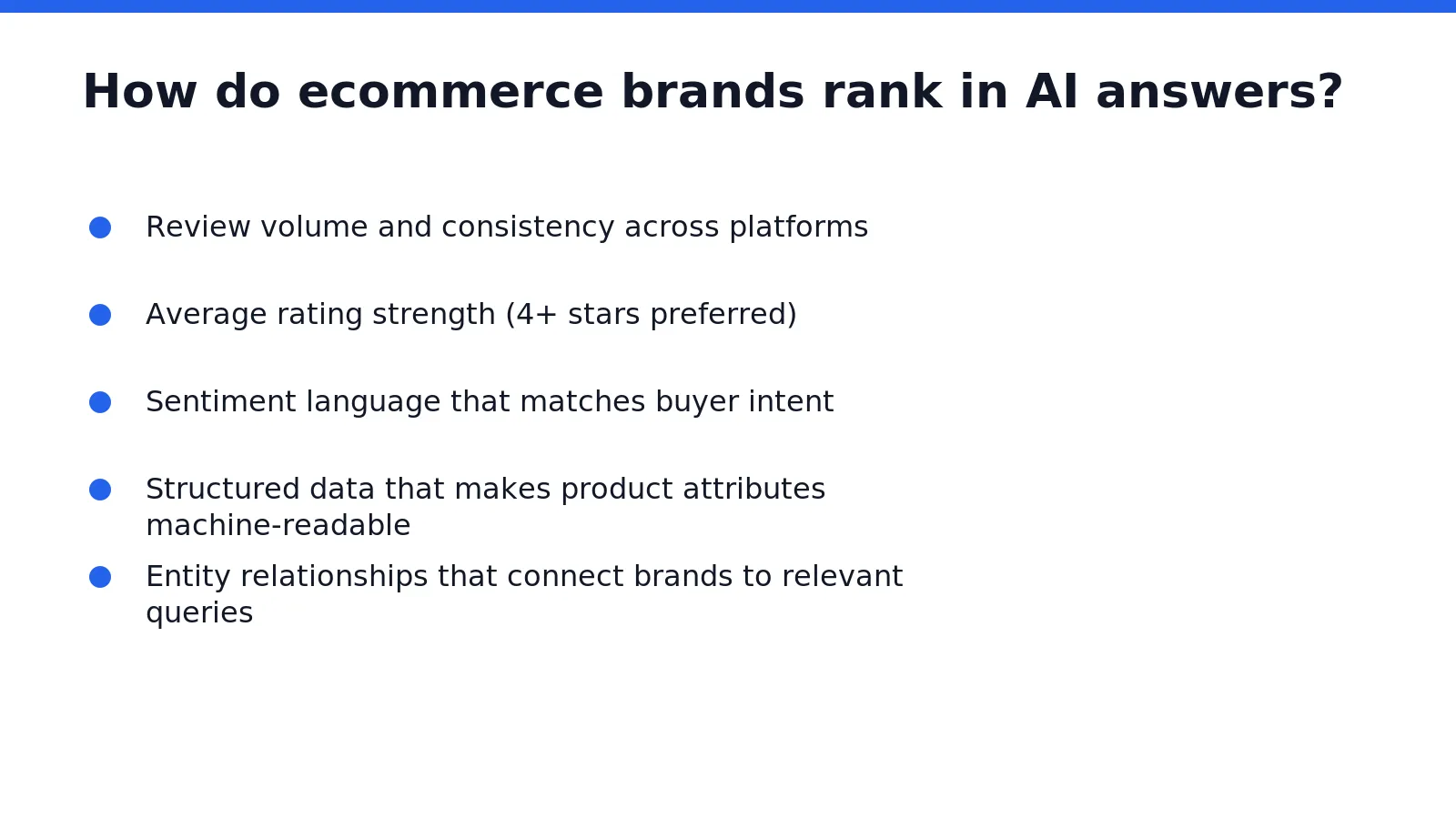
How do ecommerce brands rank in AI answers?
Ecommerce brands rank in AI answers by building signals that AI systems trust. ChatGPT processes 50 million shopping queries every day, making AI search a primary ecommerce discovery channel. Brands that appear in those answers earn visibility without competing for traditional blue links.
What signals do AI engines use to rank brands?
AI engines factor in review volume, average rating, and the sentiment of what reviewers say when deciding which brands to recommend. Consistent positive reviews across trusted platforms make a brand a safer bet for ChatGPT product recommendations. Reviews help AI systems understand whether real customers trust a business, product, or service.
How do brands optimize content for AI answers?
RankAISearch uses Generative Engine Optimization for ecommerce (GEO) and Answer Engine Optimization (AEO) to improve how AI systems understand and recommend brands. These strategies help ecommerce teams structure product pages, reviews, and category content so AI models extract and cite them naturally.
Key signals that influence AI rankings:
- Review volume and consistency across platforms
- Average rating strength (4+ stars preferred)
- Sentiment language that matches buyer intent
- Structured data that makes product attributes machine-readable
- Entity relationships that connect brands to relevant queries
Brands that optimize these signals see their products recommended inside AI answers instead of buried beneath generic search results.

What do product page AI case studies show?
Product page AI case studies show that structured technical optimization directly drives measurable traffic and revenue gains. One verified ecommerce ai case study demonstrated a brand going from low to 38,000 clicks in six months through a focused ecommerce AEO strategy during the off-season. These results come from specific technical changes, not generic content strategies.
What technical changes drive these results?
Ecommerce ai visibility requires product feed optimization and ChatGPT Shopping schema implementation. Generic AEO agencies do not provide these specialized capabilities. Brands that invest in structured product data see AI systems retrieve their offerings more frequently and more favorably.
How do citations and authority play a role?
Ecommerce ai citations earned through HARO link building and Reddit management strengthen a brand’s trust signals. AI engines weigh citation quality heavily when deciding which products to recommend. Without these authority signals, even well-optimized product pages struggle to appear in AI answers.
Product page ai case studies consistently reveal a pattern: brands combining technical schema with earned citations outperform competitors on both fronts. The question of how ecommerce brands rank in ai answers comes down to this dual approach. AI search optimization ecommerce strategies are becoming essential as more shoppers turn to generative platforms before ever reaching a traditional search results page.
Conclusion
In closing, ecommerce brands operating in today’s AI-driven landscape cannot afford to ignore visibility across generative search platforms. The case studies explored throughout this article demonstrate that strategic optimization, from content structuring to authority building, directly influences how AI systems discover, evaluate, and recommend your business. RankAISearch empowers ecommerce companies to adapt their visibility strategies for this new reality, ensuring they remain discoverable where customers increasingly search. The brands winning in AI search aren’t waiting; they’re optimizing now.