

Llm Optimization: AI Search Optimization and Digital PR

Entity and knowledge shaping means structuring brand information so generative AI platforms like ChatGPT and Google AI Overviews recognize, connect, and cite it accurately. RankAISearch builds this through knowledge graph alignment, structured content, and consistent entity signals across the web, strengthening how AI systems summarize brand attributes, customer fit, and topical authority within commercial answers.
Why Is Entity Knowledge the New Battleground in AI Search?
Entity knowledge determines whether an AI system recognizes a brand as a credible answer. Traditional SEO optimized for keyword matching and backlink profiles. Large language model optimization shifts the focus to entity relationships. How clearly a brand communicates its identity, offerings, and connections to the broader knowledge ecosystem. Beatrice Gamba, Head of Innovation at Wordlift, explains that entity-based search redefines how brands are understood in the LLM era. Meaning and the ability to clearly communicate who a brand is matter most.
What makes entity knowledge different from keyword rankings?
Keywords signal relevance to a search engine. Entity knowledge signals identity to an AI model. When ChatGPT or Google AI Overviews evaluates a brand, the system looks for structured connections between the brand name, its products, its industry, and its customer problems. A brand with strong entity signals becomes a predictable recommendation. A brand with weak entity signals remains invisible, regardless of keyword rankings.
How does consistency affect AI trust?
Machines and people alike respond to consistency and clarity. Ensuring brand values are digitally represented with precision is essential to being visible and trusted by AI systems. Inconsistent naming, scattered product descriptions, or conflicting category labels confuse entity extraction. Entity optimization resolves these conflicts by aligning every digital touchpoint around a single, machine-readable brand identity.
[LLM knowledge shaping](https://rankaisearch.com/services/llmo/) requires brands to control how AI models connect their name to specific attributes, products, and expertise. How to shape LLM knowledge about brand starts with auditing every public mention for consistency. RankAISearch helps brands build this entity foundation, ensuring visibility where AI search decisions happen.
How Do Knowledge Graphs Shape LLM Understanding of Your Brand?
Knowledge graphs shape LLM understanding by mapping the precise relationships between a brand, its products, and the concepts customers search for. This structured approach solves a core problem in llm optimization: large language models need explicit, machine-readable connections to recommend a brand accurately. Without a knowledge graph, an LLM treats brand mentions as isolated text strings rather than entities with defined attributes and relationships.
What structural gaps do knowledge graphs reveal for brand visibility?
Structural gap analysis identifies missing connections between concept clusters in a brand’s digital footprint. These gaps represent content opportunities where a brand can bridge ideas that competitors keep separate. For example, if an LLM associates “sustainable packaging” with one cluster and “durable materials” with another, a brand that connects both concepts gains stronger entity recognition. RankAISearch uses this analysis to guide structured content creation, ensuring generative AI models accurately understand and recommend client brands.
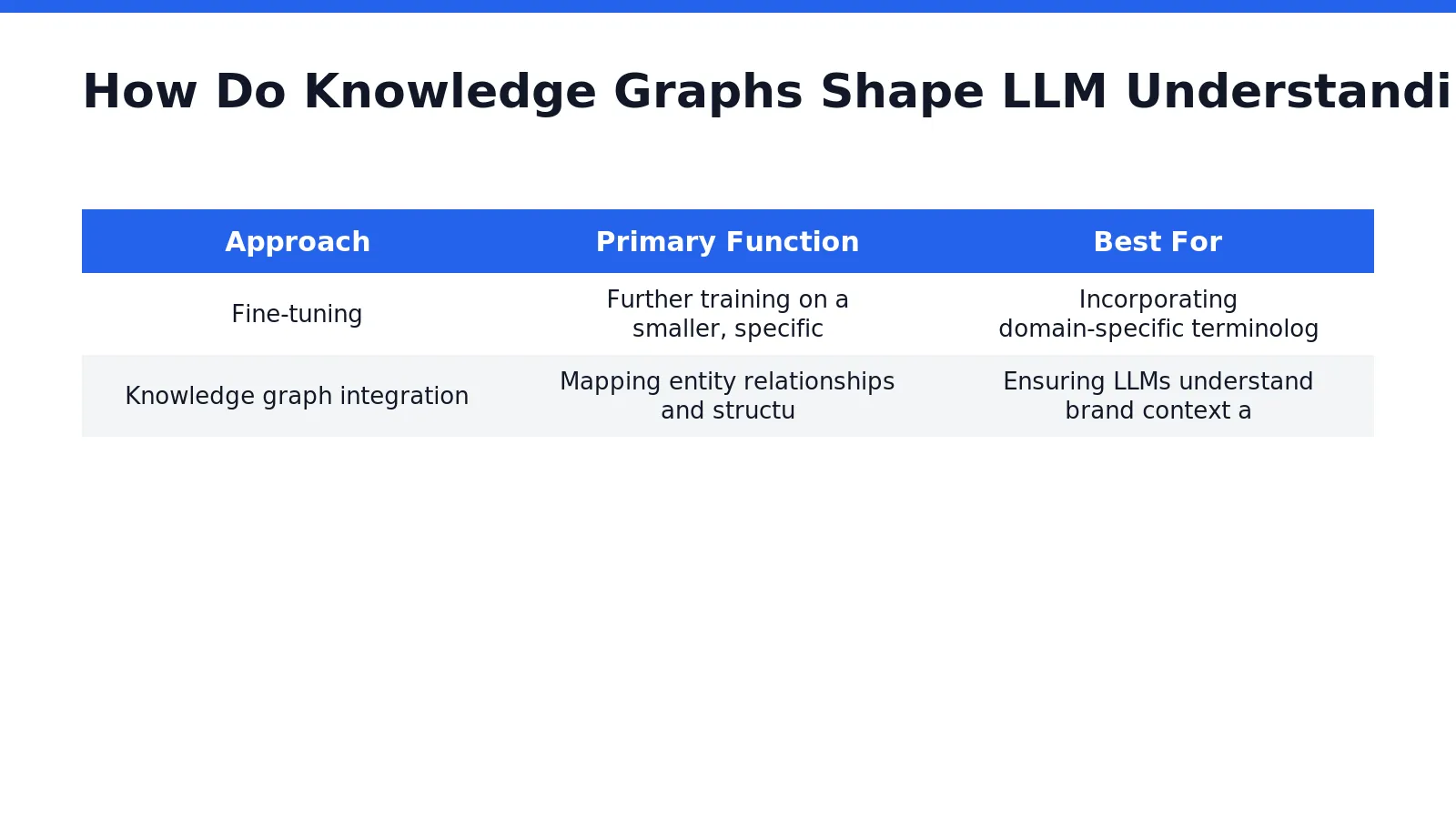
How does fine-tuning differ from knowledge graph integration?
Fine-tuning enables the incorporation of domain-specific knowledge. Terminology that might not have been adequately covered in the original pre-training data. Knowledge graphs, by contrast, provide the relational framework that makes [entity optimization](https://rankaisearch.com/what-is-artificial-intelligence-optimization/) effective. RankAISearch combines both approaches through technical SEO, content optimization, and topical authority building to strengthen brand visibility across AI search platforms.
What Steps Make Your Brand the Answer AI Platforms Cite?
RankAISearch helps brands earn citations, mentions, and authority, allowing AI platforms to confidently recommend their businesses. The process requires structured actions across content, reviews, and entity signals that machines can parse and trust.
How Do Reviews Shape AI Brand Recommendations?
Repeated praise for fast service, easy setup, durable products, or helpful support gives AI systems language they can summarize. Reviews influence AI recommendations because they connect customer experience to specific buyer needs. Consistent positive reviews across trusted platforms make your brand a safer recommendation for an AI to make.
What Role Does Entity Optimization Play?
Entity optimization ensures AI systems recognize a brand’s relationships, attributes, and relevance within a knowledge graph. This step grounds large language model optimization by giving models clear, structured data about what the brand offers and who it serves.
The Core Steps in Practice
- Earn structured citations across authoritative third-party sites and review platforms
- Shape review language around repeatable praise terms AI can extract and summarize
- Build topical authority through content that connects brand offerings to specific buyer needs
- Maintain consistency in brand descriptions, categories, and entity relationships across the web
RankAISearch’s values encompass ethical practices and transparency, delivering sustainable results through customized growth strategies. LLM knowledge shaping happens when these signals align — AI platforms see a coherent, trustworthy entity worth recommending. How to shape LLM knowledge about brand starts with this foundation of earned authority and structured entity data.
Conclusion
In closing, entity and knowledge shaping through LLM optimization represents the frontier of AI search visibility. By strategically structuring content and building topical authority, brands position themselves as trusted sources that generative AI platforms confidently recommend. The future belongs to businesses that understand how AI systems evaluate and cite information—and take deliberate action to earn that recognition. The shift toward AI-driven search is irreversible, making now the moment to invest in optimization strategies that ensure your brand becomes the answer customers seek.