

Aeo vs Geo: AI Search Optimization and Digital PR
Brand fit depends on the goal: AEO targets direct answers inside featured snippets, voice search, and platforms like ChatGPT and Perplexity. GEO shapes content so generative engines like Google AI Overviews and Copilot Search synthesize and cite it. Brands prioritizing immediate answer placement lean AEO; brands building broad AI-generated authority lean GEO, often combining both.
Key Takeaways
- AI Overviews reduce click-through rates for top-ranking Google content by 58%, reshaping visibility strategies.
- AEO positions your brand as the direct answer AI systems deliver to users searching.
- GEO ensures AI models generate responses using your content across ChatGPT, Gemini, Perplexity, Claude.
- Brands strengthen authority through citations and mentions, enabling AI platforms to confidently recommend their businesses.
What is the difference between AEO and GEO?
Answer Engine Optimization (AEO) and Generative Engine Optimization (GEO) serve different stages of the AI search funnel. AEO targets direct-answer formats — featured snippets, voice search responses, and concise AI answers — by structuring content so AI systems extract a single, authoritative reply. GEO, by contrast, optimizes entire content bodies for AI models like ChatGPT, Claude, and Google AI Overviews, making the full material usable for synthesis and recommendation. The core difference is scope: AEO wins the one-line answer; GEO wins the cited source.
What does AEO optimize for?
AEO focuses on getting content selected as a direct answer. This means structuring pages with clear question-and-answer formats, concise definitions, and bulleted lists that AI systems can pull verbatim. The goal is to appear in featured snippets. Voice search results where users get a single, spoken or displayed answer without clicking through.
What does GEO optimize for?
GEO makes content usable by AI systems across generative platforms. This involves structuring information with clear entity relationships, authoritative citations, and comprehensive coverage that allows models to synthesize responses. GEO content earns citations in AI-generated answers, driving brand visibility even when users never visit the website directly.
For brands navigating the aeo vs geo decision, the answer engine vs generative distinction determines where to invest. A strategy comparison reveals that AEO works best for high-volume, fact-based queries where users want a quick answer. GEO suits complex, commercial, or comparative queries where AI systems synthesize multiple sources. RankAISearch helps brands strengthen online authority across both approaches, earning trusted citations that drive visibility regardless of how users search.
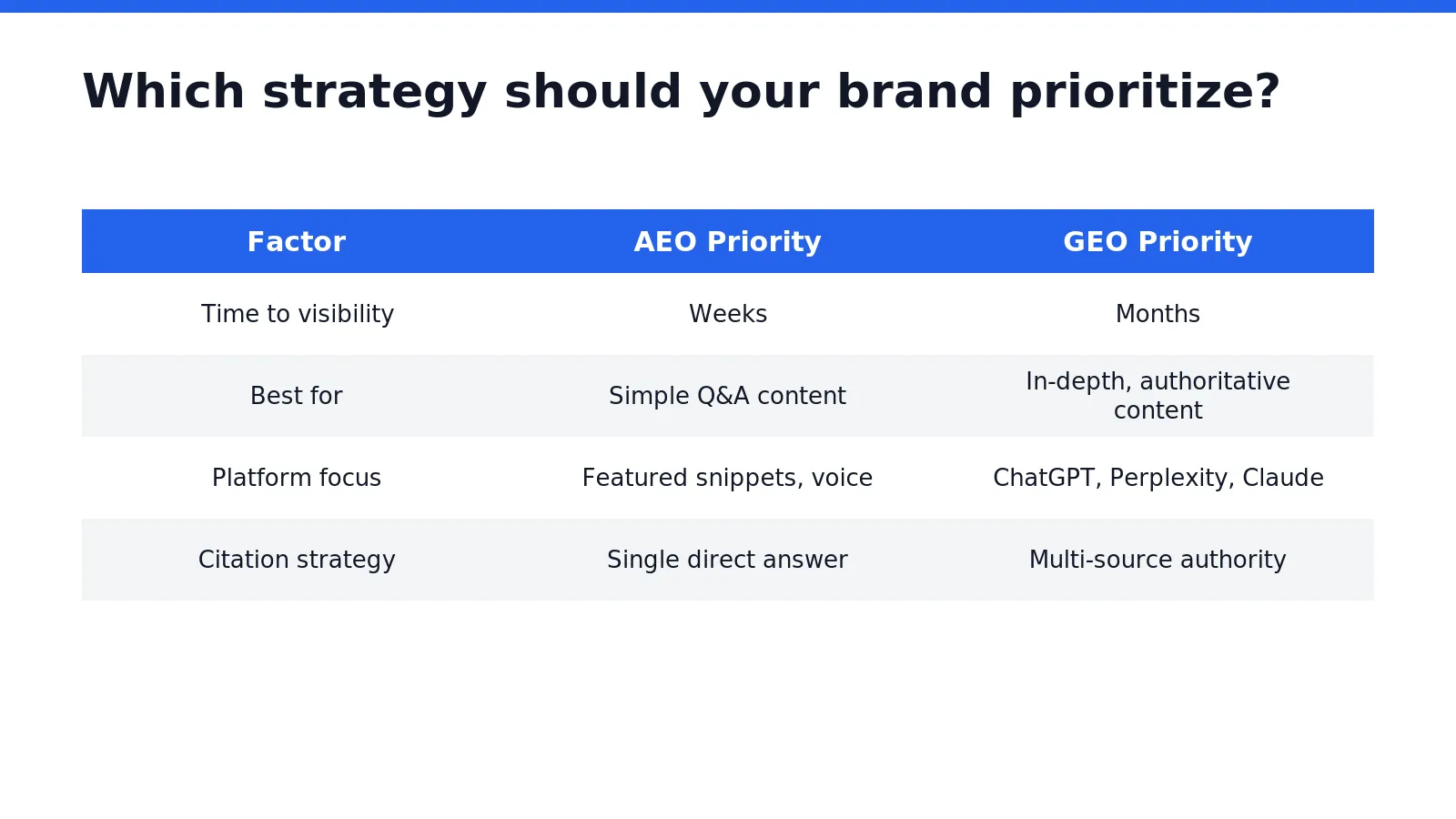
Which strategy should your brand prioritize?
McKinsey’s October 2025 research found that half of consumers already use AI-powered search to guide buying decisions, with $750 billion in US consumer spend flowing through these platforms by 2028. This single statistic clarifies the aeo vs geo question: prioritization depends entirely on whether a brand needs immediate visibility in structured answer boxes or sustained authority across multiple generative platforms. The answer engine vs generative distinction determines where optimization dollars produce the fastest return.
When does AEO win?
AEO (Answer Engine Optimization) works best for brands that need direct, concise answers selected for featured snippets, voice search responses, and short-form AI answers. This strategy comparison reveals that AEO suits businesses whose customers ask straightforward questions with single correct responses — pricing tiers, product specifications, or simple troubleshooting steps. AEO content typically ranks within weeks when structured as clear question-answer pairs.
When does GEO deliver?
GEO (Generative Engine Optimization) suits brands aiming for long-term visibility across platforms like ChatGPT, Perplexity, and Claude. Rather than targeting a single answer position, GEO makes an entire body of content referenceable by AI models during response generation. This approach requires sustained authority building and consistent citation patterns across multiple sources. RankAISearch helps brands earn those citations and mentions so AI platforms confidently recommend their businesses across diverse query contexts.

How do AEO and GEO overlap in practice?
AEO and GEO overlap because both strategies aim to make content discoverable by AI systems, but they target different discovery points. Answer engine vs generative optimization share the same end goal: getting brand information into AI-generated responses. The difference lies in the type of query each approach handles best.
When should a brand use AEO instead of GEO?
AEO works best for short, direct queries where users want a single, precise answer. This approach optimizes content to become the direct answer in featured snippets, voice search results, and AI answer boxes. AEO answers the question “What is the refund policy?” with a concise, extractable response.
When does GEO outperform AEO?
GEO handles complex, multi-step questions that AI models must synthesize from multiple sources. This strategy comparison reveals that GEO optimizes content structure and context so AI systems can generate comprehensive responses. GEO answers the question “How does this product compare to competitors for enterprise teams?” by making the brand’s comparative data machine-readable.
RankAISearch integrates both approaches through AI visibility audits and content optimization for authority building. The agency helps brands strengthen their online presence across ChatGPT, Google AI Overviews, Gemini, Perplexity, Claude, and Copilot. This dual strategy ensures visibility whether a customer asks a simple question or a complex, multi-faceted one.
Conclusion
In closing, the choice between AEO and GEO isn’t binary—it’s strategic. Your brand’s visibility across AI-powered search platforms depends on understanding which approach aligns with your goals, audience, and content strengths. Whether you prioritize answer-driven discovery or generative engine placement, the foundation remains the same: authoritative content, earned citations, and seamless AI comprehension. RankAISearch helps brands navigate this evolving landscape with customized strategies that ensure your business reaches customers exactly where they’re searching.